By: Roberta MacIntyre
California’s Voter ID Debate: Addressing a Nonexistent Problem
Living in Northern California gives you a different perspective on how elections actually work. Out here, democracy isn’t theoretical. It happens in small county offices, volunteer‑run polling places, and kitchens where vote‑by‑mail envelopes are filled out between work shifts, caregiving, and—some years—evacuation orders.
That’s why the latest Republican‑backed voter ID ballot initiative feels so disconnected from reality. It claims to fix a problem that simply doesn’t exist, while ignoring how voting already works in places like Lake County and across the North State.
California’s elections are already secure. What we don’t have is a mandatory photo ID requirement at the polls—and those two facts are not in conflict.
The Recurring Claim of Insecure Elections
California already conducts secure elections. The absence of a photo ID requirement does not undermine this security.
Every few years, the claim surfaces in California politics that our elections are insecure due to the absence of a photo ID requirement at polling places. Currently, a new Republican-backed ballot initiative is once again promoting mandatory voter ID as a necessary solution, despite a lack of evidence that such a problem exists.
California already runs secure elections. What we don’t have is a photo ID requirement, and those two facts are not in conflict.
Existing Safeguards and Voter Verification
Contrary to some rhetoric, voting in California is not an unregulated process. Voters must register by providing identifying information, which is then cross-checked with state and federal databases. Ballots must be signed, and those signatures are meticulously verified against records on file. If a signature does not match, the ballot is not counted unless the voter’s identity is confirmed. If there is an issue at the polls, the voter casts a provisional ballot, counted only after eligibility is confirmed.
This process ensures thorough verification before, during, and after Election Day.
The Limits of a Photo ID Mandate
The proposed voter ID initiative would concentrate on a single point of verification: presenting a government-issued photo ID at the polling place. Supporters claim this would increase confidence in elections, but true confidence should be based on evidence, not fear.
The type of fraud that voter ID laws aim to prevent—voter impersonation at the polls—is extremely rare and already illegal. California’s current system is designed to address actual problems such as registration errors, duplicate registrations, and mismatched signatures, none of which would be solved by photo ID requirements.
Potential Barriers to Voting
Implementing voter ID requirements would create additional barriers. Millions of Californians do not drive; others are elderly, have disabilities, or have documentation that does not exactly match their current information. Presently, these voters are verified through alternative means rather than being excluded. A strict voter ID law would force many of them to use provisional ballots or potentially discourage them from voting at all.
This approach creates not security, but friction in the election process.
Voting: A Right, Not a Consumer Transaction
Proponents of the initiative often compare voting to activities like boarding a plane or buying alcohol, which require ID. However, voting is not a consumer transaction but a fundamental right. The system’s goal should be to ensure both security and accessibility, not greater restriction.
California’s Effective Model
California’s model emphasizes eligibility verification over performative gatekeeping. While less visible than checking IDs at the polls, it is more effective in ensuring election integrity.
The Costs of Implementing Voter ID
Implementing voter ID requirements would incur costs beyond finances—it would erode trust. New training, updated procedures, and increased provisional ballots would slow results and create confusion. Money and resources would be spent addressing a problem that has not been substantiated, while risking the disenfranchisement of legitimate voters.
Measuring Success by Effectiveness, Not Appearances
Protecting democracy should not be about how stringent laws appear, but about their practical effectiveness. California’s elections are secure, audited, and backed by multiple verification layers. Introducing a voter ID mandate would not strengthen this system, but instead distract from it.
Conclusion: Focus on Real Solutions
Ballot initiatives should address genuine issues. The proposed voter ID measure does not solve existing problems, adds unnecessary complexity, and risks excluding voters who are following the rules.
California does not need to adopt a solution in search of a problem. The state already has an effective system in place.
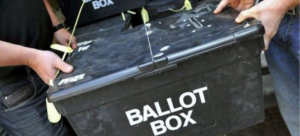
Photo by Unknown Author is licensed under Creative Commons